In today’s digital-first world, your website is much more than an online brochure—it’s your most valuable salesperson. Unlike a traditional sales representative who works limited hours, your website is available 24/7, engaging potential customers, answering their questions, showcasing your products or services, and encouraging them to take action.
Whether you’re a startup, a local business, or an established enterprise, your website often creates the first impression of your brand. Before contacting a company, most customers visit its website to learn more, compare options, read reviews, and decide whether they can trust the business.
If your website is designed strategically, it can attract visitors, build credibility, generate qualified leads, and convert prospects into loyal customers—all without taking a break.
Let’s explore why your website is truly your best salesperson.
1. Your Website Never Closes
Unlike a physical store or office, your website works around the clock. It remains accessible 24 hours a day, 365 days a year, allowing customers to learn about your business whenever it’s convenient for them.
Many buying decisions happen outside regular business hours. A potential customer might search for your services late at night, during weekends, or while commuting. If your website provides the information they need, it keeps your business available even when your team is offline.
This continuous availability means you’re never missing opportunities to connect with potential customers.
2. It Creates a Powerful First Impression
First impressions matter.
Research consistently shows that users form opinions about a website within just a few seconds. An outdated, cluttered, or slow-loading website can cause visitors to leave before exploring your offerings.
A modern, clean, and professional website immediately communicates credibility and professionalism. High-quality visuals, consistent branding, intuitive navigation, and clear messaging reassure visitors that they’re dealing with a trustworthy business.
Your website should reflect the quality of your products or services. If your website looks polished, customers are more likely to believe your business is reliable.
3. It Builds Trust and Credibility
Today’s consumers research before making purchasing decisions.
When visitors land on your website, they look for signs that your business is legitimate and experienced. Elements that help establish trust include:
- Customer testimonials
- Client reviews
- Case studies
- Certifications
- Awards
- Portfolio examples
- Secure HTTPS connection
- Contact information
- Company background
These trust signals reduce uncertainty and make customers feel more confident about choosing your business over competitors.
A website that answers common questions openly and transparently helps build long-term credibility.
4. It Educates Potential Customers
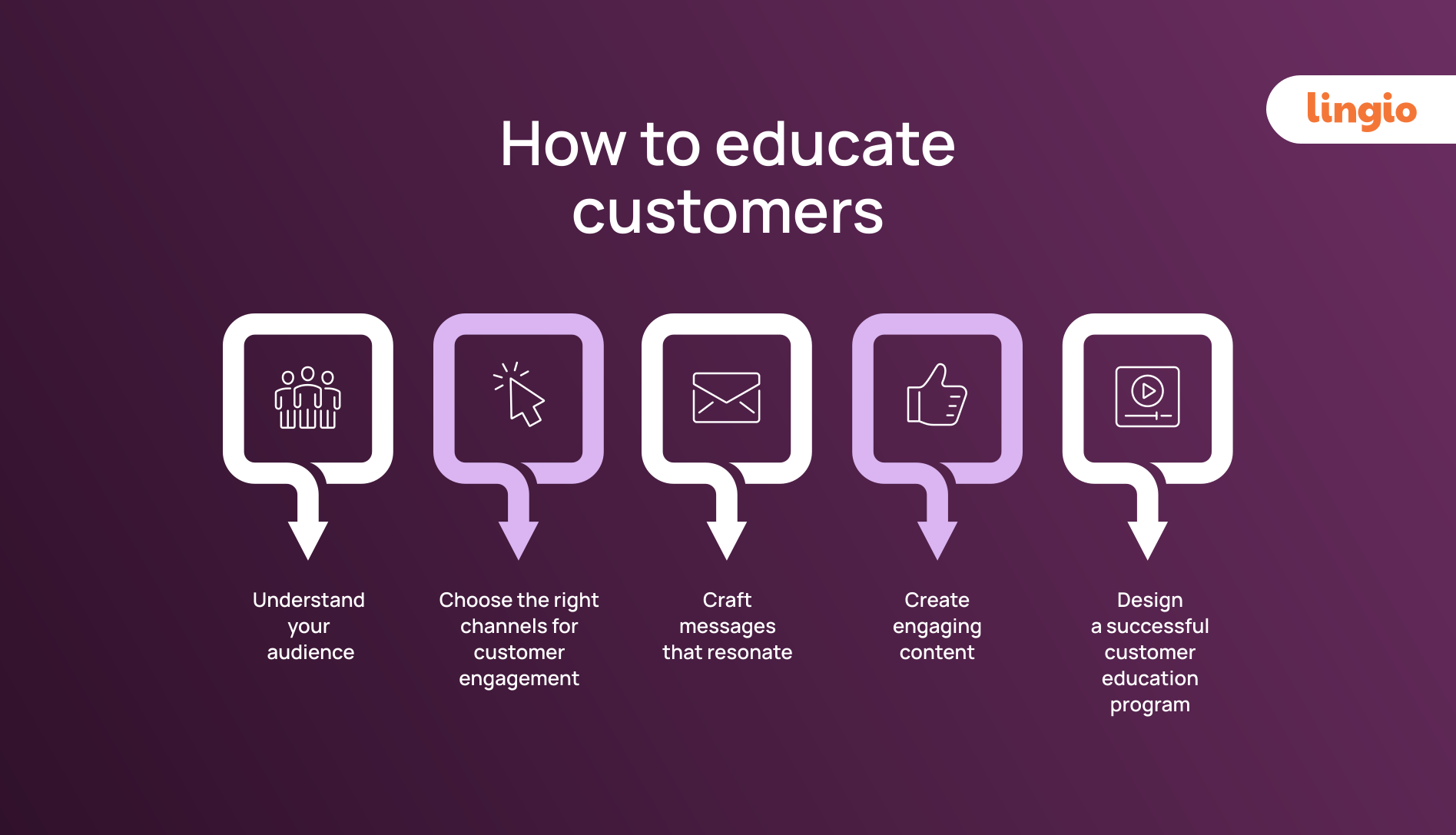
A great salesperson doesn’t just sell—they educate.
Your website can explain your products, services, pricing, processes, and unique value proposition before customers even contact you.
Educational content such as:
- Blog articles
- FAQs
- Buying guides
- Videos
- Tutorials
- Service pages
- Product comparisons
helps visitors understand how your business solves their problems.
When customers are well-informed, they make decisions faster and require less convincing during the sales process.
5. It Generates Qualified Leads
Your website can actively collect leads while your team focuses on serving existing customers.
Lead generation tools include:
- Contact forms
- Quote request forms
- Newsletter subscriptions
- Live chat
- Free consultations
- Downloadable resources
- Demo bookings
Instead of waiting for phone calls, your website captures valuable customer information automatically.
With the right calls-to-action placed throughout your website, visitors are encouraged to take the next step in their buying journey.
6. It Answers Questions Before Customers Ask
One of the biggest advantages of a well-designed website is that it answers frequently asked questions before a customer reaches out.
Visitors often want to know:
- What services do you offer?
- How much do they cost?
- Where are you located?
- What industries do you serve?
- How long does delivery take?
- How can they contact you?
Providing clear answers saves time for both customers and your sales team.
An informative website reduces unnecessary inquiries while improving customer satisfaction.
7. It Helps You Reach More Customers
Unlike a local salesperson, your website has no geographical limitations.
With effective Search Engine Optimization (SEO), your website can appear in search results whenever people look for products or services you offer.
Instead of relying solely on referrals or traditional advertising, your website continuously attracts new visitors through:
- Google searches
- Social media
- Email marketing
- Online advertising
- Business directories
- Content marketing
The more visible your website becomes, the more opportunities you have to generate leads and increase revenue.
8. It Supports Every Marketing Campaign
Every digital marketing effort eventually leads customers back to your website.
Whether you’re running:
- SEO campaigns
- Google Ads
- Social media marketing
- Email campaigns
- Influencer partnerships
- Content marketing
your website acts as the central hub where visitors learn more and convert into customers.
Without a high-performing website, even the best marketing campaigns may struggle to deliver strong results.
That’s why investing in your website improves the effectiveness of every marketing channel.
9. It Showcases Your Expertise
Customers prefer businesses that demonstrate authority in their industry.
Publishing valuable content regularly positions your brand as a trusted expert.
Examples include:
- Industry insights
- How-to guides
- Tips and tricks
- Success stories
- Market trends
- Educational blogs
When visitors consistently find useful information on your website, they begin to trust your expertise.
This trust often leads to higher conversion rates and repeat business.
10. It Provides Valuable Customer Insights
Unlike traditional sales conversations, websites provide measurable data.
Analytics tools help you understand:
- Where visitors come from
- Which pages they visit
- How long they stay
- Which services interest them most
- What devices they use
- Where they leave your website
These insights help businesses improve user experience, optimize marketing campaigns, and make better business decisions.
By understanding customer behavior, you can continuously improve your website’s sales performance.
11. It Converts Visitors into Customers
A successful website doesn’t simply attract traffic—it converts visitors into paying customers.
Key conversion elements include:
- Clear calls-to-action
- Fast loading speed
- Mobile-friendly design
- Easy navigation
- Strong headlines
- High-quality visuals
- Trust signals
- Simple contact forms
Every page should guide visitors toward a specific action, whether that’s requesting a quote, making a purchase, scheduling a consultation, or contacting your team.
When designed strategically, your website becomes a powerful sales funnel.
12. It Delivers Long-Term Value
Hiring and training salespeople requires ongoing investment.
A website, however, continues delivering value long after it’s launched.
While regular updates and maintenance are important, a high-quality website keeps generating traffic, leads, and sales for years.
Combined with SEO, content marketing, and digital advertising, your website becomes one of the highest-return investments your business can make.
Instead of relying solely on manual sales efforts, your website creates a scalable system for attracting and converting customers.
How to Make Your Website Your Best Salesperson
If you want your website to work harder for your business, focus on these essentials:
- Design a clean, professional layout.
- Ensure fast loading speeds.
- Make your website mobile-responsive.
- Write clear, customer-focused content.
- Include strong calls-to-action.
- Display testimonials and client reviews.
- Optimize for search engines.
- Use high-quality images and videos.
- Keep information accurate and up to date.
- Track performance using analytics and improve continuously.
Small improvements can significantly increase conversions and customer engagement over time.
Final Thoughts
Your website is no longer just an online presence—it’s a powerful business asset that works tirelessly to attract visitors, educate prospects, build trust, generate leads, and close sales.
In many cases, potential customers interact with your website before they ever speak to a member of your team. That means your website has the responsibility of making a great first impression, communicating your value, and guiding visitors toward becoming customers.
Businesses that invest in a fast, user-friendly, and SEO-optimized website gain a significant competitive advantage. A well-designed website supports every marketing effort, strengthens your brand, and creates opportunities for growth around the clock.
If your current website isn’t generating the leads or sales you expect, it may be time for an upgrade. By improving your website’s design, content, performance, and user experience, you can transform it into your most effective salesperson—one that never sleeps, never takes a day off, and is always ready to help your business grow.